Is The Walmart & Google Partnership Agentic Commerce’s Inflection Point?

A big news day on Monday at NRF 2026. And perhaps the start of an inflection point for agentic commerce. And maybe the beginning of a Retail Media Reckoning.
I’ve been waiting for this news to drop about Walmart and Google’s agentic commerce integration within Gemini. It marks a seismic shift in how retailers will compete for consumer attention. And for Brands and Sellers, this news will compress, flatten, and speed up the funnel, but more on that later. Make no mistake: this partnership is less about technology and more about first-party data asymmetry, and may fundamentally rewrite the Retail Media playbook.
Here’s the reality check: Google’s own data reveals that retail clients are consuming 90 trillion monthly AI tokens! (according to Google’s Sundar Pichal’s blog post today) A staggering jump from 8.3 trillion in December 2024. Yet Google itself frames this as “evolution, not revolution.” That’s the tell. The scale is undeniable, but the adoption velocity and maturity still lag the hype cycle. And in my opinion should be the final proof point that data has flipped the script on Retail media, which used to be about shelf control and sponsored placements. Data has turned it into a growth operating system

Walmart’s Unfair Advantage
Walmart enters this moment with assets competitors can’t replicate overnight: 270 million weekly customers, 19 years of omnichannel transaction data, and Sam’s Club membership loyalty insight data. By embedding shopping directly into Gemini, Walmart isn’t just gaining a distribution channel; rather, it’s reclaiming shopper intent that previously escaped to Google Search! The Universal Commerce Protocol gives Walmart something Amazon has guarded fiercely: direct pipeline access to consumer moments of intent, without the search intermediary tax.
More importantly, Walmart’s ability to personalize across online, in-store, and membership data and complete fulfillment in 30 minutes or three hours creates a closed-loop system (prediction: and a future moat) that will train Gemini’s models on conversion patterns Amazon can only theorize about (for now). This creates a data compounding advantage for Walmart.
What Amazon Should Actually Fear
I’ve led WPP’s global Amazon Ads business for several years and know that their ad business thrives on search intent clarity and lower-friction conversion in a walled garden. This new Walmart model threatens both. And that won’t go unnoticed or defended.
IF Gemini successfully routes commerce conversations to Walmart, Amazon will lose (perhaps only for the moment) the discovery-to-purchase funnel it has long dominated and enjoyed extracting advertiser value for over the past several years. But here’s the catch: Amazon, being Amazon, will pivot to OpenAI very aggressively (as they’re already doing with ChatGPT), fragmenting the agentic commerce landscape. Instead of one AI shopping assistant, we’ll have competing LLM ecosystems with embedded retail loyalty wars. And viola! Friction returns. Where does this leave OpenAI? At the moment, they are out in the cold when it comes to the fastest-growing media segment. Since I’m a cyclist, I would equate this to being dropped by the peloton…and now they have more work to do to get back drafting from the group if they can.
The Retail Media Earthquake
For retailers outside Walmart/Amazon, this is terrifying and a clarifying moment. Retail media programs (and a few companies’ businesses that have piggybacked on this) built entirely on search and social will become secondary channels. Smart retailers will urgently need to:
Rethink search strategy: Search’s role diminishes when shopping intent lives inside Gemini. Brands will shift budgets from paid search to “agentic commerce placements” – unleashing a new arms race without standardized metrics yet. (How will that be monetized?)
Accelerate first-party data: You can’t compete on Walmart’s or Google’s terms, but you can own your own shopper context. Retailers must rapidly build unified customer profiles across channels or become permanent tenants in someone else’s mall.
Retool shopper programs: Dynamic bundling, AI-powered recommendations, and contextual (hello Seedtag?) merchandising become mere table stakes. The demise of static promotional calendars has probably arrived.
My Three Predictions
1. Scaling will take 18-24 months longer than anticipated, with hidden costs (ie, scaling delays=opportunity cost). The 90-trillion-token data point proves AI commerce activity is accelerating, but Google’s own “evolution, not revolution” framing is instructive. Gemini adoption for true transactional commerce is still embryonic. User behavior training, reliable attribution across devices, and liability resolution when Gemini recommends the wrong product remain unsolved. Retailers betting their 2026 retail media strategy on agentic commerce as a primary channel will be disappointed.
2. The retail media margin compression is inevitable, but only for second-tier players. Walmart, Amazon, and a handful of platform retailers (ie, Kroger/84.51) will command premium rates because they have unmatched customer data and fulfillment speed. Everyone else becomes a cost-per-transaction commodity. Brands will consolidate spend to a narrower set of retail partners, shrinking the addressable market for mid-tier retail media networks.
3. Privacy regulation will become the hidden bottleneck. Gemini’s ability to personalize shopping recommendations will depend on cross-domain data sharing that government regulators (IMO they don’t fully understand) are actively tightening (EU Digital Markets Act, California regulations). By 2027, expect significant friction around what data retailers can share with Google or other AI platforms for agentic commerce. The real winner may not be Walmart but rather regulatory arbitrage. And maybe clean room vendors (Liveramp, AWS, Snowflake, etc.).
Bottom Line
I love this partnership as it shows the strategic value of smart partnership leaders that understand what is happening at the intersection of data, ad-tech, media, retail media and shopper and AI to transform and evolve this space – especially since it’s my speciality! And it’s just the beginning of agentic commerce, and another reason I love working in this space and playing in this intersection. There is SO MUCH to do. Welcome to the 1st inning. Retail media’s spoils over the next three years will belong to those who treat this as an urgent signal to invest in owned-media capabilities and first-party data infrastructure, not those betting their strategies on being featured in someone else’s AI assistant.
The Streaming Ad Market is Consolidating Around One DSP”
The Amazon DSP (they hired an agency to come up with a better name) is consolidating the streaming ecosystem in ways many advertisers haven’t yet fully recognized.
For years, effective streaming strategies required juggling disconnected platforms—Prime Video, FAST channels, live content apps, and proprietary devices. That fragmentation is ending. Over the past 18 months, Amazon has unified nearly every major streaming partner and publisher into a single DSP, from premium networks and live sports to free ad-supported channels.
The scale is significant. Amazon DSP reached 275 million monthly ad-supported customers in the US as of October 2024, with advertising revenue jumping 22% to $15.7 billion in Q2 2025. Recent integrations include Spotify (October 2025), Netflix (launching Q4 2025), and Disney (June 2025)—consolidating the major premium streaming players into one buying platform.
This matters operationally and strategically. Advertisers can now plan, buy, and measure across a substantial portion of the streaming landscape from one platform.
That’s worth repeating
This matters operationally and strategically. Advertisers can now plan, buy, and measure across a substantial portion of the streaming landscape from one platform.
By combining premium inventory with first-party retail data, deterministic measurement, and consolidated execution. The result: greater precision, faster scaling, and immediate visibility into performance.
With the exception of YouTube, Amazon DSP now reaches more of the streaming landscape than any other platform—with superior data integration, tighter partnerships, and more flexible inventory structures.
The strategic shift is clear: streaming buying is moving from channel-by-channel planning to full-funnel, outcome-based strategy. Brands and agencies that move first will capture disproportionate value.
Don’t take my word. Here are two strong sources that support my POV:
- On DSP consolidation & Netflix/Spotify integrations: https://ppc.land/netflix-becomes-available-in-amazon-dsp-starting-q4-2025/
TL;DR – This covers Netflix’s programmatic partnership with Amazon DSP launching Q4 2025, and notes that Amazon DSP reached 275 million monthly ad-supported customers in the US as of October 2024, with advertising revenue jumping 22% to $15.7 billion in Q2 2025.
- On Amazon’s market dominance strategy: https://digiday.com/marketing/with-microsoft-in-tow-amazons-dsp-tightens-its-grip-on-the-open-web/
TL:DR – This explores how Amazon is consolidating programmatic marketplace inventory into its DSP, with pricing power and first-party retail data creating a compelling value proposition for advertisers. Digiday
Bonus data points from searches:
- Amazon DSP added Spotify’s 696 million monthly users to its ecosystem in October 2025 PPC Land
- Amazon has systematically assembled premium connected TV inventory including NFL Thursday Night Football and Disney programmatic access CTOL Digital Solutions
I’d love to hear your thoughts – drop me a line or ping me on LinkedIn
How are you measuring your AI success?
What if your AI ROI isn’t showing up because you’re measuring the wrong things?
Most leaders are obsessed with measuring AI ROI in 6-9 months.
The truth? It takes years.
Infrastructure costs, data investments, and talent expenses make traditional ROI calculations nearly impossible.
But here’s the breakthrough for leaders: There’s a better way to understand AI value.
Instead of forcing ROI timelines, focus on the Hierarchy of Value:
Performance → What you delivered
The productivity gains, efficiency improvements, and accuracy boosts you can measure today
Prediction → What you captured
Competitive advantages through better pricing strategies, route optimization, faster time-to-market
Prevention → What you avoided
The human risk was eliminated. The PR disasters dodged. The pricing mistakes caught before they hit the market.
The companies thriving with AI aren’t just measuring cost savings.
They’re tracking the disasters prevented, the competitive edges gained, and new unlocks across all 3 levels.
When you shift from demanding immediate ROI to understanding this hierarchy, everything clicks.
→ Your AI investments suddenly make sense.
→ Your wins become visible.
→ Your strategy becomes clear.
That’s the breakthrough moment every leader deserves.
What’s been your experience with measuring AI value beyond traditional metrics?
@Sol
WPP and Instacart partner to accelerate online grocery advertising for CPG brands
Our team has been working on this partnership for a while and we’re excited to share this great news this week. The retail media and last-mile landscape is an exciting place to be focused and there are so many great opportunities in this green field. And the value proposition for consumers will continue to get better and more exciting.

WPP press release below
WPP and Instacart, the leading online grocery platform in North America, today announced a new partnership offering advertising solutions and measurement tools for CPG brands. The first of its kind partnership will give WPP and its clients’ early insight into Instacart Ads product offerings and access to new tools and features on the platform.
With the largest footprint across the CPG category globally, WPP recognized the importance of building advanced retail and commerce capabilities early on. The partnership with Instacart Ads, which offers a robust suite of advertising products, reflects WPP’s commitment to lead the market by delivering advanced, end-to-end commerce solutions that allow brands to thrive in online environments.
As the inaugural Analytics API partner, WPP will gain access to a custom analytics API and data integration tool that enable WPP agencies to develop unique insights for clients, including basket analysis and lifetime value. The partnership will also include custom campaign measurement and management indexes to ensure clients can optimize spend and sustainable growth on the platform.
Additionally, the companies will co-develop the first Instacart Ads agency certification program designed to provide teams with an advanced level of proficiency across Instacart’s app and products. As part of this commitment, WPP and Instacart Ads will collaborate on the learning agenda and content, and WPP teams will gain access to the certification program before it is launched to the general market. WPP has committed to having 1,000 employees certified by the program within the first six months of launch.
Doug Chavez, Vice President of Strategic Partnerships at WPP, said: “The pandemic has rapidly transformed the way people shop and what they expect from brands online. This behavioral shift means we need to use cutting-edge advertising tools for brands who now need to connect and engage with their consumers across all channels. We are delighted that our new partnership with Instacart Ads will allow WPP agencies to deliver even more innovative solutions to clients that enhance the online grocery shopping experience.”
Ryan Mayward, Vice President of Sales at Instacart, said: “Instacart Ads is designed to support brands of all sizes, helping them access the opportunity to deeply engage with their customers online. We’re excited to partner with WPP to continue delivering that experience and together equip brands to succeed in the digital aisles with robust insights capabilities and educational resources.”
Adage also covered the news as well.

Amazon, NFL Partner To Stream Thursday Night Games; Adios, Twitter
Tim Cook once opined “The Future of TV is Apps” and those words were proudly displayed on a screen behind him when he introduced the updated Apple TV back in 2015. Just a week after the fourth-generation Apple TV went on sale, Apple commanded 31% of the streaming market, well ahead of Amazon and Roku, which at that time were the leaders. Two years on, we haven’t seen much new innovation from Apple TV but we have certainly seen a lot of content development, innovation and marketing and licensing leadership from Amazon.
This week Amazon and the National Football League (NFL) announced a licensing partnership for the 2017 season. Amazon will have the streaming rights to 10 Thursday night games during the Fall 2017 season. The deal is a switch from the NFL’s 2016 season partnership with Twitter. In 2016 Twitter and the NFL debuted their Thursday night streaming partnership with the N.Y. Jets vs. Buffalo game and reached 2.1 million people. Just as with the Twitter partnership last year, Thursday night games will be simulcast on network broadcast (CBS or NBC) and on cable via the NFL Network. That’s where the partnership similarities end.
Twitter streamed the games free of charge. Amazon will only make the Thursday night games available to Amazon Prime members. Amazon is said to have paid $50 million for the 10 games, whereas Twitter paid $10 million for their deal last year. Of course, Amazon has an existing streaming service whereas Twitter did not. Amazon also has a platform with all sorts of commerce opportunities, Alexa their AI assistant and, perhaps more importantly, millions of member profiles with credit cards on file. This partnership is rife with many more opportunities beyond the streaming games — the power of the Amazon platform.
Last year’s test with Twitter was another proof point that showed the NFL and the entertainment world that consumers are happy to get their sports content streamed across any device and it showed a snippet of possibility. At the time I wrote how Twitter was a great partner to drive engagement for their platform as fans could talk smack throughout the game with the close proximity of game/tweets. While that was great for driving higher active-user numbers for Twitter and growing their user base, there wasn’t any commerce connected. Amazon has the ability to drive equal engagement (sans tweeting in the interface) and, more importantly, more folks opting into Prime (NFL games, music, and free shipping …) and the biggest and e-commerce platform. For those reasons and only streaming to Prime customers are probably big contributors to the NFL doubling their asking price for the 10 games. Even without knowing all the details, this is big win for both Amazon and the NFL.
Where does this latest entertainment leave Apple TV? While I’m a big fan of Apple, I have to say this is yet another area where Apple has been outdone by a Seattle tech giant. In the last year, Amazon has continued to build out their entertainment business, adding more original content and winning their first ever Golden Globes. The future of TV may be apps but the content and the power of the platform behind the apps has to be creating better and more licensing deals that deliver more eyeballs and potential revenue upside. Apple seems to continually be outplayed — although they do have a shiny new company headquarters.
This new partnership with Amazon should be a great testing ground for Amazon partners looking to take advantage of the Amazon streaming sponsorship. Now is the time to start thinking about your commerce partnership with Amazon and how you can work your way into their advertising opportunities. And let’s not forget about testing ways to get your brand content into Alexa as a way to accompany all those information and service requests during Thursday night games. As marketers, our job is to ensure our brands and services are nimble enough to adapt and execute for this upcoming season and test several plays.
A Super Bowl Presidential Debate Audience And Twitter
“I don’t have any experience in running up a $4 trillion debt. I don’t have any experience in gridlock government, where nobody takes responsibility for anything and everybody blames everybody else.”
— Ross Perot at the 1992 presidential debate
Some of you reading this will remember the 1992 presidential debates with Bill Clinton, Ross Perot, and George H.W. Bush. Many thought Perot was a bit kooky with all of his charts and some of his one-liners. Oh, how Mr. Perot makes the current presidential cycle look tame. And that is about as close as I will get to making this month’s column a political missive. Instead, let’s talk about TV audiences, Sunday Night Football and Twitter.
A year ago, if I had predicted that the presidential debate would have a near Super Bowl-sized viewing audience, close to Super Bowl 50, many, if not all of you, would have laughed and made what would have seemed like a sure bet. In fact, according to Nielsen, the first presidential debate brought in 84 million viewers across 13 of the TV networks that carried it live. And that 84 million doesn’t include people who watched via numerous live streams online or at bars and restaurants. This means the actual total audience was even higher. Did I mention this was a presidential debate? For perspective, the last presidential debate between Obama and Romney in 2012 averaged 67 million viewers.
But what is amazing to me is that Twitter reported their live streams of the first two presidential debates had more viewers than the NFL games.
As many readers may know, Twitter recently began streaming select NFL games, starting with Thursday Night Football. During their first event (N.Y. Jets vs. Buffalo), Twitter’s live streams reached 2.1 million people. Football fans enjoy “smack talking” during games. Twitter knows tweets spike during games, so matching that insight with live-streaming NFL games seems a spot-on way to drive engagement on their platform. And Twitter could certainly use some higher engagement numbers. The first NFL game certainly was proof for their streaming experiment. I’m interested in seeing how Twitter’s live-streaming numbers continue during the rest of the NFL season. I would love to see them prove out this concept for the long haul and see it move into other live-events, such as the hockey, tennis, and award shows.
Twitter’s NFL live streams and now the presidential debates give them the proof they need to support their belief that Twitter can be a live-video delivery platform. While many in the industry may think the concept is a stretch and just another desperate advertising solution concept for Twitter’s weak monetization efforts, I have long believed they are the perfect platform to surround great content for passionate consumers during live events.
Are Twitter’s NFL streaming numbers huge by traditional TV standards? No. But we are still very early in their grand live-streaming experiment. Let’s give it some time and see how things go and where they innovate and iterate on the service. At a minimum, they have proved their live-streaming point.
The live-steam presidential debate numbers also point out that consumers have a thirst for content they are passionate about on non-traditional platforms. If Twitter can continue to identify passion-based content (e.g., music, sports, politics), I believe the audience will show up and engage. As marketers, we all know what happens when the audience shows up — advertising solutions follow. So, here is another chance for passion-based marketers (QSR, auto, etc.) to get in and test a still unproven area and get some great learning
One Small Step For iPhone, One Giant Leap For Mario
Every September Apple announces big product news. This September continued that tradition with the much-anticipated iPhone7 announcement. The new iPhone7, AirPods and the updated Apple Watch, were all very cool and great steps forward for Apple. What was huge news was that Nintendo’s Mario is finally coming to iOS.
While the news of Nintendo’s beloved Mario coming to the iOS world is medium-sized news for Apple, it is huge news for Nintendo. The fact that Nintendo’s legendary Shigeru Miyamoto appeared on stage at the event to announce was a very clear sign at how big and important this news is for the company.
As prologue: While many in the marketplace have been focused on the overwhelming success of Pokémon Go as a Nintendo windfall — it isn’t. Nintendo owns the IP but doesn’t make the Pokémon Go game, and it has produced very little revenue for Nintendo. Pokémon Go is collaboration between The Pokémon Company and Niantic Labs, the developer of the game. In fact, when the investors realized this, the sharp rise in Nintendo stock price saw an equal correction. In fact, Nintendo is in search for a big hit for the upcoming holiday season.
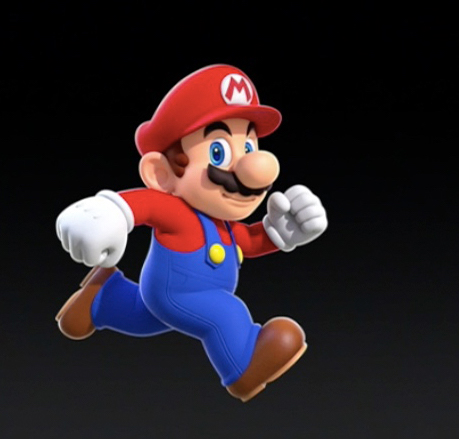
Nintendo has been slow to develop games for third-party platforms since they have historically made their own consoles and handheld devices. But that business has struggled for several seasons. Putting their most famous and beloved character on iOS is a huge step for Nintendo and I’m betting they have very big revenue forecasts tied to Super Mario Run for Holiday 2016.
If you watched the closing ceremony at the Sumer Olympics, it’s clear how popular Mario is around the world. And by putting Mario into the hands of millions of fans and, hopefully, new users around the world, the Mario franchise will see downloads and revenue stream the likes of which Pokémon Go experienced earlier this year. Even a fraction of Pokémon Go’s revenue numbers will be a success.
A key theme to recognize in both games is to understand the classic “fish where the fish are” strategy. By limiting their investment in a lagging console business and instead writing game software for a third-party platform, Nintendo has the chance to rescue their gaming business and un-chain themselves from their expensive proprietary device bondage. Also, it will be much easier for Nintendo to create commerce opportunities in an app environment as well as easily deliver updates and new adventures for Mario in a bit-based world.
Lastly, this is big news for Nintendo because Japanese companies are historically better at building “things” vs. software. Doubt that? How many Sony Walkmans do you see today? Software eats the world and has gobbled up the days of simply building a better mousetrap. If Nintendo’s Super Mario Run is a hit, this will signify a big transformation for Nintendo’s legacy as a game and hardware maker and transition to being software driven.
As marketers grapple with how to better engage with their customers, Nintendo may be a company to emulate and take some pages from their updated play book. Here’s looking to a great holiday season for that little dude in red overalls!
The Story On Stories: Snapchat Vs. Instagram

I have written previous articles about how marketers should be testing, learning and quickly iterating on platforms like Snapchat and Instagram to tell their brand stories. And recently, Mary Meeker helped drive home the point about the relevance of such social platform in her 2016 annual Internet Trends report. As a refresher:
The report showed how smartphones are increasingly used to combine several powerful storytelling tools via camera+storytelling+creativity+messaging, combined with social sharing network effect. Meeker mentioned that she and her team believe Snapchathas a “perfect trifecta” for this, especially given their daily video growth rate.
Marketers such as Wal-Mart, Sony Pictures, Ford and Dick’s Sporting Goods are just a few that have jumped into Snapchat to leverage massively engaged audiences with cool filters, storytelling and ads. An insight not to miss is that all these Snapchatters (and Instagrammers) are sending geo-specific signals each time they share. For brick-and-mortar retailers, this geo-location is a massively untapped opportunity to reach customers during a store visit and when purchase consideration is happening.
Given the combination of geo-location and marketers’ quest to reach customers in store, attribute traffic and conversion, it’s no wonder marketers are finally embracing Snapchat and Instagram in new ways. And also why Instagram’s launching of “Stories” should not surprise anyone.
Silicon Valley has a long history of companies copying each other. Steve Jobs famously saw GUI at Xerox Parc and that inspired the Mac. Many say he stole it. As Apple’s Bud Tribble is noted for saying: “If you take something and make it your own…it’s your design and that is the dividing line between copying and stealing.” That concept is part of Apple’s DNA and certainly many other tech companies in the valley. Kevin Systrom, Instagram CEO/founder, hasn’t run from the obvious copying of Snapchat. In fact, he said “they [Snapchat] deserve all the credit”. In my opinion Instagram has innovated by making the “Stories” feature much more seamless and intuitive vs. Snapchat. Snapchat will almost certainly refine their UX. But the Instagram feature and better UX is just the tip of the spear.
Instagram is owned by Facebook and has a uniquely strong capability to tap into mobile “storytelling” to augment data (especially geo-data) to fortify cross-device insights with Facebook Insights (think purchase data). This combination can be an incredibly powerful for tool for marketers. As marketers, we have become better at understanding our data streams and applying smart strategies and tactics to drive engagement and purchase. Search and social have been a proving ground for following intentions all the way to purchase. As search evolves outside of “traditional” search into platforms such as Instagram (note no search available on Snapchat), marketers will have more ammunition to target audiences and truly track path to purchase while giving attribution to the right events.
I love both Snapchat and Instagram, but the amazing cross-device, geo-targeting and massive network effect of Instagram+Facebook is why I’m betting on Instagram in the long game.
As marketers, you should already be well underway in testing and learning with these platforms and have deft understanding of your first-party data and how it can be combined with the ever increasing rich data set derived from helping consumers tell their stories. Holiday 2016 should be your best season ever with all the tools you have at your disposal. Are you ready?
What Was Old Is New Again: Pokémon Is Back!
I never played Pokémon when I was young and never really understood what the craze was about. And while I’m not among the millions in the United States who have downloaded the Pokémon Go app, I love what Pokémon Go represents for the brand and enthusiasts. What started as a simple game from Nintendo over 20 years ago and gained a lot of followers among kids and tweens worldwide has now revived the brand with a location-based, augmented reality app. And unless you live under a rock, you will have no doubt seen the news across nearly every media outlet. Pokémon Go has made national headlines across the world in the last week.
For those who aren’t familiar with Pokemon Go is, here’s a short overview:
Once a user downloads Pokémon Go to their smartphone, they are prompted to turn on location services. Once location services are on, users will see a location-aware map with other players in the real world where they can go out and look for Pokémon characters. Once they get to a specified place, players point their phone camera to “find” Pokémon in the real world in an augmented reality-playing environment. Players then shoot a ball to capture the Pokémon and collect awards.
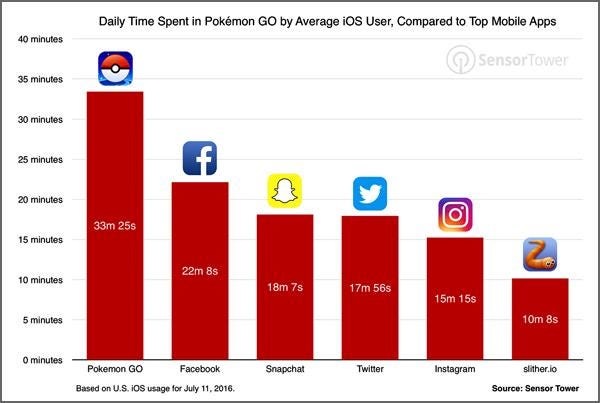
Why all the fuss over a “kids” game that now has a smartphone app? For starters, the app, which just launched a week ago has over 11 million daily active users. In the app world, that is rocket ship growth that any app or media property would love to have in a year, let alone a week! To provide some context, according to data from SensorTower, Pokémon Go is already bigger than the dating app Tinder, as big as Snapchat and Google Maps and about to overtake Twitter. And Pokémon Go players are spending an average of 43 minutes per day using the app. That daily usage rate outpaces WhatsApp, Instagram, Snapchat and FB Messenger! The cherry on the top is that it’s not just kids and tweens playing this game, it’s a lot of adults and new users to the Pokémon franchise.
As any marketer that has launched an app will tell you, two of the biggest success metrics for apps are downloads and daily active users (DAUs) or monthly active users (MAUs). Achieving download goals are hard enough. Many marketers spend millions of dollars just to drive downloads; it’s not uncommon for costs to hit $20 per download. The bigger challenge is getting users to actually keep using an app after download and that is where the vast majority of apps fail unless they have a high utility value (e.g., Tinder, WhatsApp, Messenger, etc.). Pokémon Go daily users are spending 40+ minutes each day!
Again, to provide some perspective, below is a chart from SensorTower showing Daily Usage Time of Pokémon Go vs. Social Media Apps.
Pokémon Go news stories have been making the nightly news across all the network and cable news channels about the craze and how app users are having fun in droves as well as some questionable issues arising from playing an augmented reality game in public spaces. I was nearly shamed for not playing the game by a fellow UberPool rider earlier this week, while she was looking to snag another Pokémon in the Uber. And while I’m not playing (yet), I can think of myriad ways marketers can engage and follow the lead of the Pokémon Go augmented reality app.
On a basic level, brands with location-based presence can engage with promotions. Outdoor apparel brands could leverage the location-based aspect to engage with players in parks and resorts around the globe. QSR brands could offer a limited-time experience to help drive short-term traffic and sales goals. Marketers looking for more ideas need only to listen to what Pokémon Go players are saying on across social channels about how they are engaging with the game and what types of experiences they are creating. Smart marketers will listen and respond from the plethora of ideas being shared in the community.
While I have never been a Pokémon fan, this augmented reality app has been a great way to re-introduce adults and kids to a great brand franchise in a smart and meaningful way with a technology (augmented reality) that the average consumer has had little experience with until last week. Perhaps we’re at a tipping point for the “general release” of augmented reality for the masses.
 Thunder House